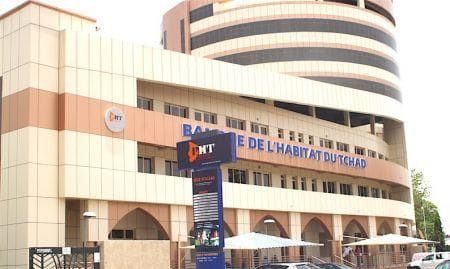
N’Djamena, Chad — In Africa, major banking deals have a peculiar fascination: capital changes hands, shareholders congratulate themselves, financial groups expand their reach, and press releases celebrate the promise of growth. Meanwhile, thousands of families are still wondering how they can afford decent housing. It is against this backdrop that Atlantic Financial Group (AFG), an Ivorian financial group associated with businessman Koné Dossongui, is seeking to take control of the Housing Bank of Chad (Banque de l’Habitat du Tchad, BHT). Already established in Cameroon and Gabon, AFG is thus continuing its expansion into Central Africa. On October 14, 2026, BHT shareholders approved a restructuring plan under which the group would become the majority shareholder. Completion of the transaction remains subject to the applicable regulatory approvals.
On paper, this initiative could illustrate the growing influence of African capital in a banking industry long shaped by international financial groups. But behind the stated ambitions lies a far more important question: What good is a housing bank if the very people it is supposed to serve still struggle to become homeowners?
One reality deserves recognition: African investors expanding their businesses beyond national borders represents a significant development for the continent’s economy. For decades, Africa was often portrayed as a land of opportunity for foreign capital. Today, African entrepreneurs themselves are helping reshape the financial landscape.
This trend can promote economic integration, mobilize savings, and support financing for local businesses. But should every acquisition be applauded simply because the buyer is African? Certainly not.
A bank controlled by African investors does not automatically become an institution that serves African people. The real issue is neither the nationality of its shareholders nor the size of its banking portfolio, but the institution’s ability to finance the real economy. After all, however impressive it may be, a financial empire does not feed anyone merely by existing. It does not automatically build homes, spontaneously create jobs, or guarantee entrepreneurs access to credit. Its commercial ambitions must translate into tangible investment.
The Housing Bank of Chad carries a name laden with responsibility. Housing is not a luxury reserved for a privileged few. It is a fundamental need, a source of family stability, and an essential pillar of economic development. Yet in many African countries, homeownership remains an obstacle course. Between inadequate incomes, limited access to mortgages, collateral requirements, construction costs, and complex land procedures, the dream of owning a home can become unattainable. Under these circumstances, the possible arrival of a new majority shareholder should prompt a public debate about the future of the bank’s housing-finance mission.
Does AFG intend to develop affordable mortgages for low- and middle-income households? Will the bank offer financing mechanisms suited to self-employed workers and people with irregular incomes? Will partnerships with property developers, local authorities, and public institutions be considered? Or will the institution prioritize banking activities that promise more immediate returns? These questions do not presume the acquiring group’s intentions. They simply underscore the need for clarity about its strategy.
A bank with “Housing” in its name should be judged, among other things, on its actual contribution to financing homes. Anything less risks becoming a splendid sign hanging above a door closed to ordinary citizens.
Atlantic Financial Group’s interest in Chad is part of a broader reshaping of Africa’s banking sector. Cameroon, Gabon, and Chad belong to the Central African Economic and Monetary Community (CEMAC), an area with a shared currency and a regional banking-supervision framework. For a group already operating in several countries in the subregion, another acquisition could offer commercial and operational advantages. But beware of that old confusion between banking expansion and social progress. Opening more institutions, consolidating shareholdings, and announcing new market entries do not, by themselves, demonstrate better access to financial services. A bank can post healthy financial results while maintaining lending conditions that remain out of reach for part of the population.
An institution can also grow its corporate loan portfolio without necessarily meeting the needs of small business owners, farmers, or low-income households. Financial inclusion cannot therefore be measured solely by branch numbers or asset values. It must also be measured by whether people can genuinely access appropriate, affordable, and reliable services. This is precisely where promises of expansion must confront economic reality.
The proposed takeover of the Housing Bank also raises questions about governance and regulation. Within CEMAC, the Central African Banking Commission (COBAC) has essential responsibilities for banking supervision. The competent authorities will need to review the transaction under the applicable regulatory requirements. The financial strength of the prospective ownership structure, governance, depositor protection, and continuity of banking operations are all important considerations. But beyond prudential requirements, another question deserves attention: What place will the public interest occupy in the bank’s new strategic direction?
Chadian authorities and the bank’s future leadership should be able to explain how this transformation will help finance the national economy. It would be particularly useful to know what commitments, if any, will be made regarding mortgage lending, small and medium-sized enterprises, and populations currently underserved by the banking system. A banking transaction should not be condemned before its results are known. But neither should it be celebrated before its promised benefits have been demonstrated.
The question extends far beyond Chad. Across the continent, the growth of African financial groups can create new financing opportunities and reduce certain forms of economic dependence. Yet the concentration of banking activities in the hands of large groups also calls for vigilance regarding competition, governance, and accessibility. The challenge is to reconcile the profitability banks need with African economies’ long-term investment requirements. The continent does not simply lack capital. It also needs effective mechanisms to channel that capital into productive sectors, infrastructure, housing, agriculture, and entrepreneurship.
Celebrating a businessman’s success or a banking group’s international expansion is therefore not enough. We must also ask what economic benefits that success produces. What would be the point of an Africa filled with billionaires and powerful financial groups if a large share of its population remained excluded from financing opportunities? Private success and collective development are not mutually exclusive. But mechanisms must be put in place so that one can contribute to the other.
Atlantic Financial Group’s potential takeover of the Housing Bank of Chad could mark an important milestone in the Ivorian group’s expansion. But several matters still deserve public clarification, including the transaction’s valuation, the final ownership structure, the new investor’s financial commitments, and the bank’s strategic direction. For USAFRICA NEWS, the debate is not about pitting African investors against foreign investors. It is about recognizing that economic development cannot be reduced to a growing number of acquisitions or ever-larger financial groups. A bank must, of course, pursue profitability, manage risk, and protect the funds entrusted to it. But when it operates in a sector as essential as housing, its impact should also be assessed against concrete indicators. How many additional households will gain access to mortgage financing? How many construction projects will receive funding?
What mechanisms will enable low- and middle-income households to benefit from the services offered? And what tangible contribution will the new ownership structure make to Chad’s economic development? These answers, not declarations of financial conquest, will determine how the transaction should ultimately be assessed.
Atlantic Financial Group’s ambitions deserve serious consideration. The emergence of African banking groups capable of investing across borders could represent an important advance in the continent’s economic integration. But an acquisition, however prestigious, is not in itself a development policy. Real success will not be measured solely by the size of Koné Dossongui’s banking network or the value of assets under his group’s control. It will also be measured by the Housing Bank of Chad’s ability to fulfill a useful economic mission on responsible and accessible financial terms. While wealthy investors discuss equity stakes, restructuring, and growth strategies, families keep searching for ways to finance a home.
A bank can change owners with a few signatures. But helping thousands of families secure a roof over their heads requires far more than a financial transaction.
If Africa truly wants to write a new chapter in its economic independence, it must learn to distinguish between two things: its investors’ prosperity and its people’s progress. Ideally, of course, the two should advance together.
USAFRICA NEWS will continue asking the question: Who truly benefits from Africa’s financial growth?


