There are Africa Cup of Nations tournaments that are played. And then some are narrated. AFCON 2025, hosted with grandeur in Morocco, firmly belongs to the latter category: a competition where goals mattered, of course, but where silences often weighed far more than the nets that rippled.
So, what, in the end, do we remember? Fiercely contested matches? Certainly. Emotion? Undoubtedly. But above all, that lingering, almost stubborn feeling that something, somewhere, was not entirely right within the grand machinery of African football, overseen by the Confederation of African Football.
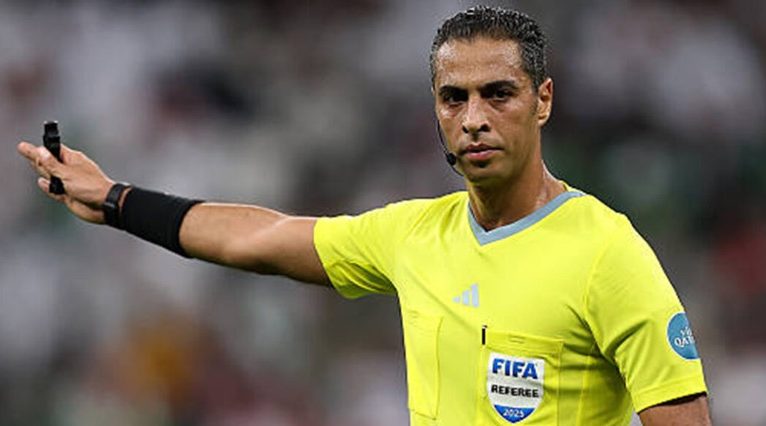
On the pitch, referees blew their whistles. Or rather, they interpreted. With a creativity that, if not universally applauded, at least succeeded in igniting passionate debate. Should we call them human errors? Questionable judgment? Or a refined sense of contextual opportunity? The question remains carefully unanswered.
Because in the upper echelons, one never speaks of “scandal.” One prefers “incidents.” Not “controversy,” but “regrettable sequences.” The vocabulary is polished, almost elegant, much like a system of governance where everything always appears under control, especially the unexpected.
Meanwhile, in VIP lounges and diplomatic corridors, one figure was impossible to ignore: Gianni Infantino, president of FIFA, whose prolonged presence in Morocco began to resemble less an official visit and more an unofficial residency. Matches, receptions, smiles, handshakes, and omnipresence so constant it became, paradoxically, remarkable.
Officially, nothing to report. Unofficially, everything to interpret.
For modern football is not merely a sport, it is a language. And in that language, symbols matter. A presence here. A proximity there. A silence elsewhere. Taken together, these signs form parallel narratives, which are rarely confirmed, never entirely dismissed.
At the center of this delicate composition stands Patrice Motsepe, president of the Confederation of African Football, conductor of an orchestra tasked with reassuring without ever truly explaining. With every controversy comes the same refrain: independence of committees, respect for procedures, integrity of process. A well-rehearsed symphony whose notes are beginning to sound increasingly hollow to a skeptical audience.
And then there is Morocco, the host nation showcase of an ambitious, modern, rising African football power. An impeccable organizer at least logistically. But also, in the eyes of some, a player whose influence now extends far beyond the touchline. Reality or perception? Once again, the line is as blurred as a poorly framed replay.
What is most fascinating, ultimately, is not so much what happened as what people believe they saw. In this AFCON, facts are debated, decisions contested, but perceptions are deeply entrenched. And in modern football, perception is a truth that requires no proof to exist.
Thus an AFCON 2025 of dual interpretation emerges:
Two narratives that coexist without ever converging, like two teams stubbornly refusing to play on the same pitch.
In the end, no one will confess everything. No one will prove anything entirely. But one certainty remains: African football emerges from this episode with a question suspended above it like a ball that refuses to fall.
And what if, in the end, the real match was not played on the field at all but in the corridors where influence, power, and elegant silences collide?


