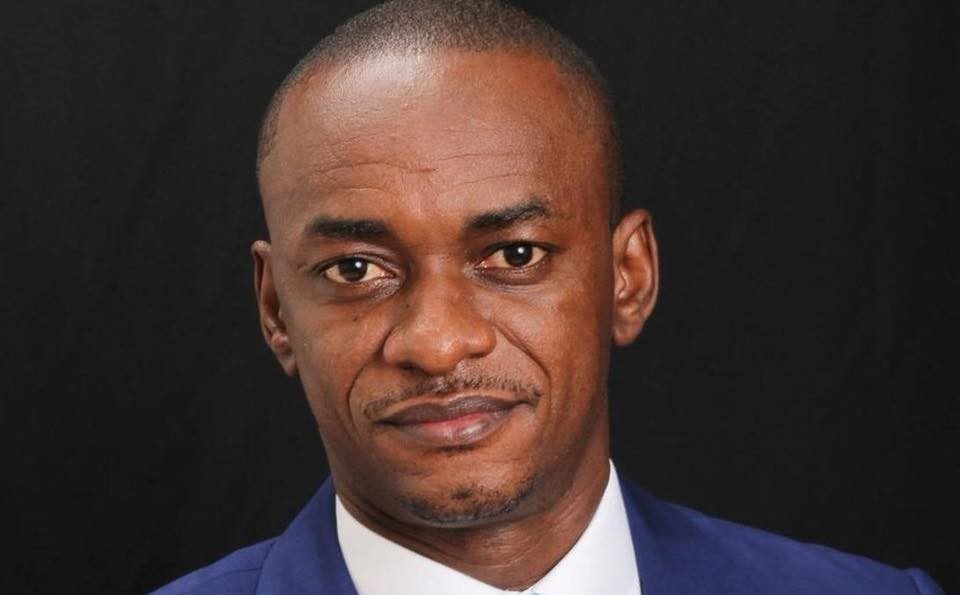
DOUALA, CAMEROON — Some countries reform their institutions to strengthen democracy. Then there is Cameroon, where every constitutional amendment seems to raise an uncomfortable question: is the aim truly to build the republic’s future, or merely to prolong the life of a political system unwilling to reinvent itself? At the heart of this latest controversy is Cabral Libii, president of the Cameroonian Party for National Reconciliation (PCRN), who is calling for the appointment of a vice president of the republic. He argues that such an appointment would safeguard institutional continuity and ease tensions surrounding presidential succession. The argument may sound reasonable. Yet behind this proposal lies a far more fundamental question: does Cameroon need a new vice president, or a genuine change of system?
A Republic Where Political Positions Multiply but Problems Persist
On April 14, 2026, Cameroon’s constitutional revision restored the office of vice president. Under the new provisions, the head of state may appoint and dismiss the vice president, who could complete the incumbent’s term if the presidency becomes permanently vacant. A major institutional innovation, then. But what an innovation! In a country where citizens are waiting for concrete answers to their daily struggles, the political class seems more preoccupied with who will occupy the next presidential office than with improving people’s living conditions. Citizens demand economic opportunities. They are offered a succession debate.
Young people demand jobs. They are presented with a new institutional framework. Families demand effective public services. They are treated to explanations of the finer points of presidential appointments. At this rate, Cameroon could end up with an impressive collection of official titles without resolving the problems holding back its development. The tragedy is not the creation of a vice presidency. The tragedy would be believing that one more seat at the top amounts to a development policy.
Cabral Libii: Can Political Pragmatism Become a Contradiction?
Cabral Libii is no newcomer to Cameroon’s institutional debate. His party had proposed amendments requiring parliamentary approval of the vice-presidential appointment and limiting the number of presidential terms. It would therefore be unfair to suggest that he has never defended mechanisms of democratic oversight. Nevertheless, his recent insistence on appointing a vice president raises a question of political consistency. How can one criticize the democratic shortcomings of a constitutional arrangement while so forcefully demanding its implementation?
Libii may, of course, argue that he is being realistic within the legal framework now in force. But political realism should never exempt a leader from addressing citizens’ legitimate concerns. There is a considerable difference between acknowledging the existence of a constitutional provision and elevating its implementation to a national priority. Cameroon does not need an opposition that merely comments on the machinery of power. It needs an opposition capable of explaining how it intends to transform that machinery. By continually trying to repair a system without sufficiently questioning its foundations, one risks becoming the permanent mechanic of a machine one has promised to replace.
Presidential Succession: Has Cameroon Become a Hostage to Its Own Institutions?
The debate over the vice presidency goes far beyond Cabral Libii himself. It reveals deep anxiety about Cameroon’s institutional future. In his October 13, 26 statement, the PCRN leader warned of political deadlock and tensions if the vice-presidential office remains vacant. His concern deserves serious consideration. But why should a country with a constitution, parliament, government, judiciary, and numerous public administrations be so fearful of a possible presidential succession?
A genuinely resilient republic should not depend on the fate of a single individual. Institutions should be able to function regardless of the age, health, or physical presence of the person leading the state. Yet when an entire nation seems suspended in calculations over succession, the strength of its institutional architecture must be called into question. Cameroon cannot organize its future forever around one question: who will succeed Paul Biya? The real question should be: what kind of Cameroon do we want to build after decades of concentrated power?
An Appointed Vice President: Republican Continuity or an Orchestrated Succession?
This is where the debate becomes especially sensitive. Under the revised Constitution, the vice president is not directly elected to that office by universal suffrage. The president of the republic makes the appointment. And under the circumstances specified by the Constitution, that appointee could assume the highest office in the land for the remainder of the presidential term. In other words, one man’s choice could determine who leads the entire country tomorrow. This is not to suggest that such a procedure is automatically unlawful. It is now part of the constitutional framework.
But legality does not eliminate questions about democratic legitimacy. Christian Ntimbane Bomo, president of the Heritage Party, has sharply criticized Libii’s position, arguing that such an appointment could facilitate a succession decided without a fresh popular vote. The controversy is therefore real.
On one side are those who defend institutional continuity. On the other are those who fear a transfer of power without a genuine electoral decision. Caught in the middle are the Cameroonian people, who deserve more than a spectator’s role in choosing their leaders. Stability is a national necessity. But it must never become a convenient excuse for pushing popular sovereignty into the background.
While Politicians Calculate, the People Wait
Perhaps it is time to remind Cameroon’s entire political class of an elementary truth: institutions are not ends in themselves. They exist to serve citizens. Constitutional reform does not automatically put food on a family’s table. A presidential appointment does not spontaneously create jobs. A new vice president does not guarantee medicines in hospitals, better schools, or reduced social inequality. Cameroon must, of course, prepare its institutional future. But that preparation cannot indefinitely dominate public debate at the expense of urgent economic and social needs.
What good is a republic perfectly organized to transfer power if it struggles to guarantee its citizens the basic conditions of a dignified life? Cameroonian politics sometimes resembles an enormous condominium board meeting, with everyone debating who gets which office while the building itself desperately needs major repairs. Everyone wants to know where the next chair will go. But who is paying enough attention to the foundations?
Cameroon’s Opposition Confronts Its Historic Responsibilities
Cabral Libii, Maurice Kamto, and other opposition figures may pursue different strategies. That is the very essence of political pluralism. But their differences should not obscure a shared obligation: to offer Cameroonians credible prospects for democratic transformation. The opposition cannot become merely a contest of media statements. Nor can it be reduced to a perpetual battle over who has the cleverest interpretation of the government’s intentions.
Cameroonians have every right to demand concrete proposals on judicial independence, electoral transparency, fighting corruption, accountability in government, and improving public services. They also have the right to demand consistency. A political leader does not automatically become a reformer simply by criticizing the government. Reformers earn that description by presenting credible alternatives, upholding consistent principles, and accepting scrutiny of their own proposals.
Cameroon Deserves Better Than an Endless Succession of Appointments
The fundamental issue is not whether the next vice president will be Anglophone or Francophone, from the North or the South, close to the ruling establishment or from another political camp. Such considerations may matter in a country marked by deep historical and social divisions. But they cannot replace the essential question: what democratic safeguards will govern the exercise of power? Changing faces without changing methods risks producing nothing more than a new version of the same old problems.
Genuine political change is not simply about replacing one leader with another. It requires institutions capable of holding rulers accountable, punishing abuses, protecting freedoms, and allowing citizens to choose their representatives freely. That is the transformation Cameroonians should be entitled to demand. And that is the standard by which political leaders should be judged.
USAFRICA NEWS: THE CAMEROONIAN PEOPLE DO NOT NEED A SAVIOR APPOINTED BY DECREE
Ultimately, the debate initiated by Cabral Libii has at least one merit: it brings back to the forefront a question Cameroon cannot avoid forever—how to organize its political future. But it would be dangerous to reduce that discussion to the appointment of a new figure at the summit of the state. Cameroon deserves a far more ambitious debate. It deserves institutions that function without depending on the personal will of a single leader.
It deserves a constitution that protects popular sovereignty rather than merely serving as a mechanism for preserving power. It deserves an opposition that proposes far-reaching change and a government that can be held accountable. Cabral Libii has every right to advocate appointing a vice president. His opponents have just as much right to warn of the risks. But neither side should forget the essential truth: the republic belongs neither to the president, nor to a prospective vice president, nor to political party leaders.
It belongs to the Cameroonian people. Until that principle is fully reflected in the functioning of its institutions, Cameroon may continue to multiply appointments, constitutional revisions, and promises of stability. Yet it will remain trapped by the same fundamental question: when will we finally stop organizing power around individuals and start organizing the state around its citizens? Cameroon does not need one more chair to move its history forward. It needs a functioning democracy, accountable institutions, and a political class that finally understands that governing is not about inheriting a country; it is about serving a nation.


