At times, the world’s great powers seem to discover realities Africans have denounced for years, suddenly. Villages destroyed. Families displaced. Children deprived of an education. Women forced to flee the fighting. And amid this tragedy, an international diplomatic establishment issues statements while the guns keep firing.
Today, Paul Kagame’s Rwanda finds itself directly exposed to American pressure. On October 28, 2026, the U.S. Department of the Treasury announced sanctions against Rwanda’s Ministry of Defence and Zigama Credit and Savings Society, a Rwandan financial institution. Washington alleges that they played a role in providing military and financial support to the M23 rebel movement operating in eastern Democratic Republic of the Congo (DRC).
This is no longer merely a diplomatic statement delivered in front of cameras. These are official economic measures. In the language of international relations, sanctions often signal that diplomatic smiles are no longer enough.
For months, claims have circulated that Donald Trump issued Paul Kagame a 72-hour ultimatum. Some versions call for Rwandan forces to withdraw from Congolese territory. Others go much further, alleging that the Rwandan president was ordered to relinquish power.
But where is the official communiqué? Where is the presidential statement? Where is the evidence of such an ultimatum? A fact-check published in December 2025 had already found no evidence supporting an alleged American 72-hour ultimatum to Kagame.
It would therefore be irresponsible to present this claim as an officially announced decision. That does not make the situation any less serious. The real story is not an imaginary clock counting down the final hours of Kagame’s presidency. The real story is that Washington is now sanctioning institutions at the heart of Rwanda’s security establishment. That deserves far more than a sensational headline.
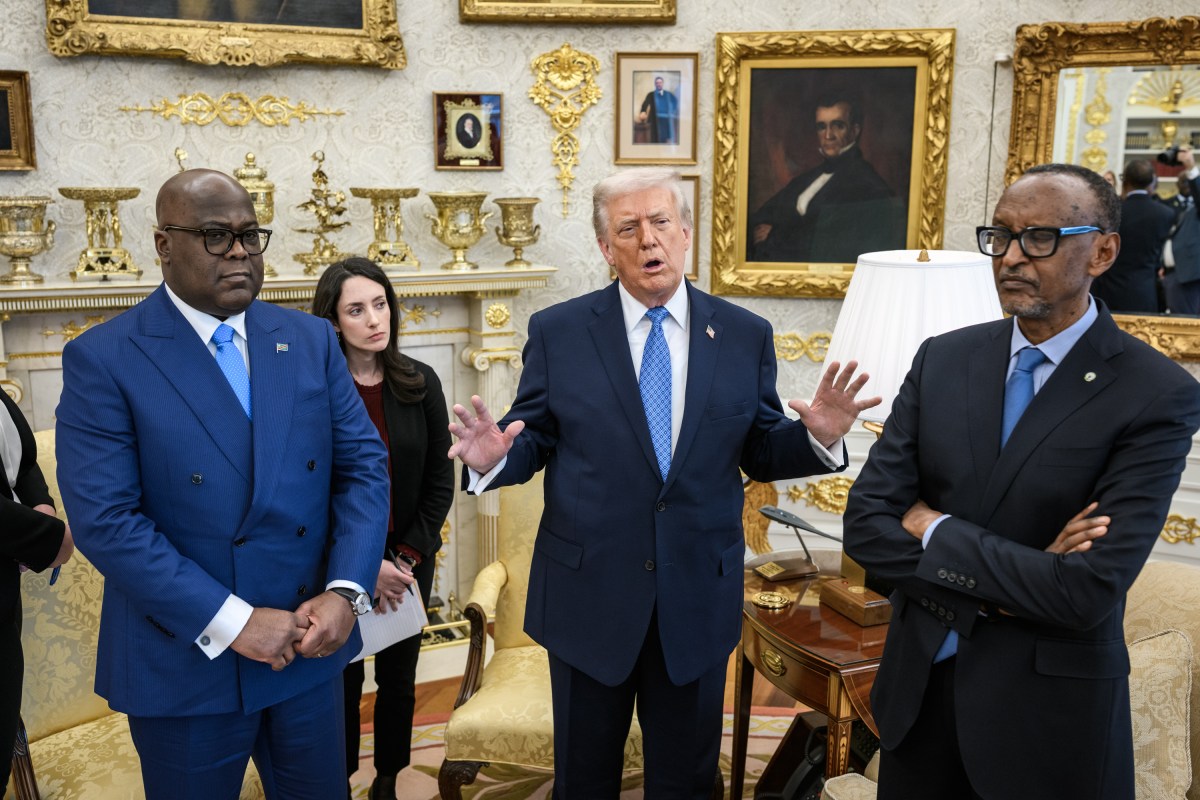
On December 4, 2025, Donald Trump welcomed Paul Kagame and Félix Tshisekedi to Washington for the signing of an agreement intended to promote peace between Rwanda and the DRC. The occasion was meant to mark a historic turning point. But what is a solemn signature worth when people are still fleeing their homes?
What is a diplomatic handshake worth when commitments fail to deliver lasting security? And what is the point of a peace agreement if the mechanisms for enforcing it remain inadequate? According to U.S. authorities, Rwandan forces continued to provide military support to M23, including equipment, logistical assistance, and training. Kigali disputes these allegations and argues that Kinshasa has failed to honor its own commitments regarding the FDLR, an armed group Rwanda considers a security threat.
We must therefore distinguish alleged responsibility, documented facts, and the competing positions of governments. Yet one question remains: How much longer must Congolese communities wait for diplomacy to deliver something more than official photographs?
For decades, Paul Kagame has cultivated the image of a leader who helped rebuild Rwanda after the 1994 genocide. The country has made progress in several areas, including infrastructure and public services. Yet his model of governance has also drawn criticism over political freedoms and the concentration of power.
Today, it is above all Kigali’s regional policy that is fueling tensions. The American sanctions announced on October 28 represent a particularly serious warning. Washington has gone beyond condemning alleged support for M23. The U.S. Treasury has also raised concerns about financial networks linked to Rwanda’s security establishment and the trade in minerals originating from rebel-controlled territories.
This is a dimension of the conflict too often pushed into the background. Behind the military confrontations lies the question of natural wealth. Coltan, gold, and other minerals carry enormous economic value. And when armed groups control mining areas, the question of who profits from those resources becomes impossible to ignore. The African scandal is not simply that people are dying on resource-rich land. It is that those lands can continue generating fortunes while their inhabitants lose everything.
It would nevertheless be naive to portray Donald Trump as Africa’s providential savior. The United States also pursues diplomatic, security, and economic interests in the Great Lakes region. The Washington agreement includes an economic cooperation and investment component, notably involving supply chains for strategic minerals.
That raises an uncomfortable question: Would Washington have shown the same diplomatic urgency if eastern Congo did not possess such extraordinary strategic wealth? This is a legitimate editorial question, not a proven conclusion. But it deserves to be asked. The history of international relations teaches an often uncomfortable lesson: great powers can defend principles while simultaneously pursuing their own interests. Africa must learn to examine both realities at once.
Beyond the confrontation between Kigali, Kinshasa and Washington lies a far more painful reality: the lives of people in eastern DRC. Families who no longer know where they will sleep. Children whose childhood has become an endless flight from danger. Parents who have lost their land, their livelihoods and sometimes their loved ones. Entire communities still waiting for a peace they have been promised for decades. U.S. authorities have themselves denounced extrajudicial killings, arbitrary detention, torture, and forced labor in territories controlled by M23.
It is difficult to imagine a greater contradiction. A country can be immensely rich in natural resources while its people endure devastating poverty and insecurity. While leaders negotiate, ordinary people struggle to survive. While diplomats draft agreements, displaced families search for shelter. While powerful nations discuss critical minerals, families simply search for their next meal. Congo does not need another peace ceremony. It needs peace to become a lived reality.
This is where the debate must be approached seriously. If the allegations against Rwandan authorities are substantiated, they should carry political consequences and, where the legal conditions are met, appropriate proceedings. But three distinct issues must not be confused: sanctions against military institutions, the personal responsibility of a head of state, and the possible end of that leader’s tenure. The sanctions announced on October 28 do not, by themselves, constitute a decision requiring Paul Kagame to resign. Nor does Donald Trump possess any general legal authority to remove a foreign president through a simple ultimatum.
Rwanda’s political future must belong to its people and institutions, with respect for fundamental rights and democratic principles. That is precisely what is at stake. Africa should not have to choose between leaders accused of abuses and foreign powers claiming the right to decide its future. It should be able to demand accountability from its leaders without surrendering its sovereignty.
The alleged 72-hour ultimatum attributed to Donald Trump remains unconfirmed. The American sanctions, however, are real. And they raise a fundamental question: Is the Trump administration prepared to go beyond financial measures to secure meaningful implementation of peace commitments? For Paul Kagame, the challenge is not merely to respond to American allegations. It is also to demonstrate that Rwanda’s regional policies can contribute to lasting peace. For Félix Tshisekedi, the challenge is to strengthen civilian protection, governance, and the DRC’s effective sovereignty. For Donald Trump, it is to prove that the promised peace amounts to more than a proclaimed diplomatic achievement. And for the African Union, this is another opportunity to show that the continent can take an active role in resolving its crises rather than continually waiting for outside powers to intervene.
For the real ultimatum is not the 72-hour deadline social media attributes to Donald Trump. The real ultimatum is the one history is delivering to Africa’s leaders: How many more people must die before peace, sovereignty and human dignity matter more than political calculations? Africa deserves better than endless wars, empty promises, and agreements that fail to protect its people. Above all, the Congolese people deserve to live in peace on their own land.


