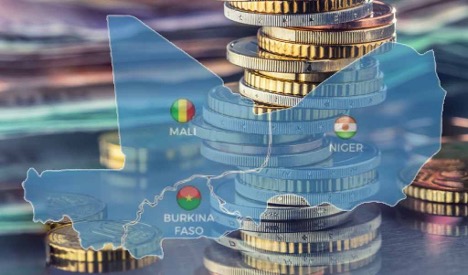
THE SILENT EARTHQUAKE: AES BANK IS REWRITING AFRICA’S FUTURE WITHOUT ASKING FOR PERMISSION
In a world where most revolutions begin with noise, slogans, and gunfire, the most seismic shift in Africa’s recent history came quietly. No parade. No press conference. No international headlines. Just three forgotten nations Burkina Faso, Mali, and Niger launching a bombshell in the form of a bank. A real bank. A sovereign, confederated, regionally owned financial institution built not with aid or debt but with local reserves and unshakable conviction.
It is called “La Banque Confédérale pour l’Investissement et le Développement”. However, behind its lengthy name lies a concise, powerful message: Africa will no longer ask for permission to dream.
A Bank Born of Defiance
Just 24 hours after returning from Moscow, Captain Ibrahim Traoré, the military leader of Burkina Faso, ignited a movement that will resonate throughout the continent. Together with Mali’s Assimi Goïta and Niger’s Abdourahamane Tchiani, he launched the AES Bank, which was fully funded by the trio’s combined local savings, totaling over 500 billion CFA francs (approximately €800 million). This wasn’t charity. It wasn’t a loan. It was Africa investing.
This isn’t just economic restructuring; it’s a political declaration disguised as a balance sheet. These nations, often labeled as poor, unstable, and dependent, decided to break the script. They didn’t cry out; they built. Brick by brick, decision by decision, they laid the financial foundation of an Africa that will no longer wait on Western goodwill or IMF conditions.
No More Begging Bowls
For decades, these Sahelian nations have been caught in a cycle of empty promises and conditional aid. Airports that never opened. Roads that end in dust. Dreams are sold to consultants and frozen in feasibility studies. Development was a slideshow that looked appealing on paper but was invisible in practice.
But with AES Bank, the rules have changed. No more project approvals from Brussels. No more budget lines dictated by Washington. Now, development flows from within: from local farmers needing tools, from solar grids powering villages, from trade routes that remain within the continent. AES is not just about money; it’s about movement, about allowing Africa’s wealth to circulate among Africans.
A New Currency of Trust
The launch of AES Bank does more than just finance infrastructure. It rebuilds something more fragile and invaluable: trust. For years, even money lacked faith in Africa; transactions were blocked, cross-border payments were delayed, and growth was hindered by colonial currencies like the CFA franc. But now? Money crosses Sahelian borders without needing to go through Paris.
Imagine sending money from Mali to Niger with just one click no euros, no dollars, no foreign fees. That’s what this bank enables. It’s not a fantasy. It’s operational. It’s African. It’s real.
Roads, Rails, and Real Power
Beyond spreadsheets, AES Bank is driving physical transformation. Imagine uranium from Niger being transported by train to factories in Mali and sold in markets in Burkina Faso, creating a regional loop that benefits African producers instead of foreign exporters. The AES vision is circular and sovereign. From grain to goods, from energy to education, the bank’s investments focus on empowering local systems rather than fueling global supply chains.
From extensive solar farms illuminating previously overlooked Sahel villages to innovative agricultural hubs that guarantee food security and lessen dependence on imported wheat and rice, the bank is financing precisely what previous systems failed to provide: self-sufficiency.
Not a Rebellion: A Blueprint
This is not an angry reaction. This is not a pan-African tantrum. It is a plan: a patient, strategic, unyielding blueprint forged from disappointment and executed with precision. Where ECOWAS stumbled and the CFA failed, the AES stands tall, and its bank is the heartbeat.
It’s no surprise that Guinea and Chad are now knocking at the door, eager to join a bloc that offers something neither the AU nor the World Bank ever delivered: respect.
The True Independence
True sovereignty was never going to be won at the UN or in former colonial capitals. It was always going to be built right here, in the dust of Ouagadougou, the mines of Niger, the markets of Bamako. And today, that sovereignty has a fiscal arsenal. Its name is AES Bank.
In a world obsessed with loud power, these three countries have chosen quiet strength. Their revolution isn’t televised; it’s digitized, solar-powered, and farmer-funded. This is not a footnote in African history; it is the chapter heading of a new Africa.
When Africa writes its checks, it finally shapes its future. And that, more than any bullet or banner, is what truly terrifies the old-world order.


