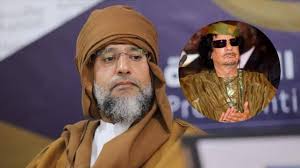
The Assassination of Saif al-Islam Gaddafi: Recent Developments
According to Reuters, on February 3, 2026, Saif al-Islam Gaddafi son of Libya’s former ruler Muammar Gaddafi was assassinated at his residence in Zintan, western Libya, at the age of 53.
Unidentified armed men, often described as “four masked assailants,” reportedly disabled the security cameras and stormed his home before fatally shooting him. Libya’s Attorney General confirmed that the cause of death was gunshot wounds, while investigators continue working to identify the perpetrators and their motives.
According to The Times, although accusations circulated suggesting that Brigade 444, an armed unit affiliated with the Government of National Unity, may have been involved, the unit has denied any responsibility. The exact circumstances therefore remain shrouded in mystery.
Who Was Saif al-Islam Gaddafi? A Controversial Heir
According to Wikipedia, Saif al-Islam was long considered the potential successor to his father, Muammar Gaddafi, who ruled Libya for more than 40 years before being overthrown and killed during the 2011 uprising.
Educated in the United Kingdom and holding a doctorate, he cultivated a complex reputation: viewed by some as a modern reformer capable of engaging with the West, and by others as a pillar of the Gaddafi regime responsible for brutal repression.
During the 2011 revolt, he vowed to “violently crush” opposition forces, leading to accusations of crimes against humanity and an arrest warrant issued by the International Criminal Court.
After being captured by a militia in Zintan in 2011, he was sentenced to death in 2015, later granted amnesty in 2017, and gradually re-entered political life.
Political Context: A Still-Divided Libya
Saif al-Islam attempted a dramatic political comeback by announcing his candidacy in Libya’s planned 2021 presidential election. His participation was one of the main reasons for the postponement of the vote, as it deeply polarized public opinion.
Libya’s political landscape remains marked by intense tensions: rival governments in Tripoli and Benghazi, influential armed militias, and a fragile electoral process.
In this context, some observers believe that Saif’s death could paradoxically facilitate a return to a more stable electoral process by removing a major political flashpoint but it could also reignite fears of reprisals and escalation among rival factions.
Why Was He Killed? Likely Motives and Theories
Libya remains torn by local militias, some hostile to the Gaddafi legacy, which may have viewed Saif as an obstacle to their ambitions. The organized nature of the attack suggests a coordinated operation rather than a random crime.
For many Libyans who suffered under the former regime, the assassination could be seen as an act of vengeance or summary justice against a symbol of authoritarian rule.
Since Saif al-Islam was seen as a potential obstacle to reconciliation or to free elections, some actors domestic or foreign may have sought to eliminate the possibility of his return to political influence.
Impact and Consequences
The death of Saif al-Islam Gaddafi marks a potentially decisive turning point for Libya. It could:
The international community is closely monitoring developments while investigations continue to determine responsibility.


