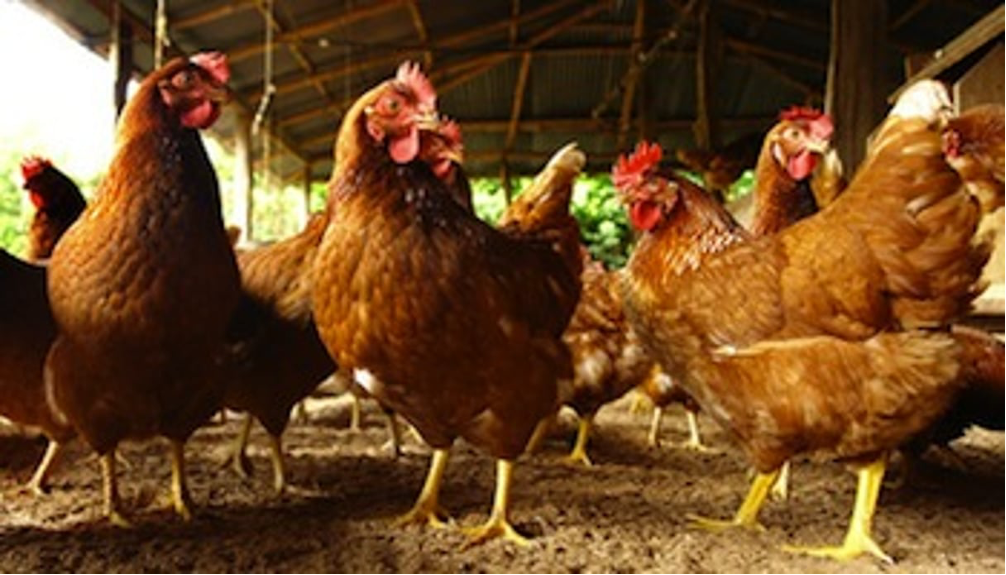
The audacity of it!
In a country where small producers struggle daily with rising production costs, limited access to credit, inadequate infrastructure, and international competition, Cameroonian chicken has suddenly found itself at the center of a media storm. Its alleged crime? Containing substances potentially harmful to human health. The controversy stems from a study published on September 1, 2026, by researchers at the University of Yaoundé I and the Institute of Medical Research and Medicinal Plants Studies (IMPM).
The scientists detected several heavy metals in chicken meat and egg samples from three regions of Cameroon. This finding deserves serious attention. Public health is no place for looking the other way in the name of unquestioning food nationalism. Yet there is an enormous difference between detecting contaminants in selected samples and portraying an entire national industry as a health hazard a distinction some commentators seem remarkably willing to ignore.
Since when have 48 chickens been enough to condemn millions of birds across an entire country? And why does this controversy revive the old specter of massive frozen-chicken imports?
The study, conducted by researchers including Fabrice De Paul Tatfo Keutchatang, Elie Fokou, Hippolyte Tene Mouafo, Gabriel Medoua Nama, and Germain Kansci, examined health risks associated with heavy metals in poultry products.
The researchers examined:
The analyses used 18 composite samples of muscle tissue, liver, and eggs. A supplementary survey also examined the consumption habits of 900 households. The study investigated six elements: lead, nickel, arsenic, cadmium, chromium, and mercury. In certain chicken-liver samples, the researchers measured mercury concentrations ranging from 798.3 to 845.5 micrograms per kilogram. Their dietary-exposure assessment identified potential health risks for certain consumer groups, particularly children and adolescents.
This is therefore not a study that can be dismissed. Its findings warrant further investigation and stronger monitoring. But the study alone cannot establish what proportion of all chickens in Cameroon have comparable concentrations. That distinction matters.
Science should identify risks and protect consumers, not automatically turn a limited observation into a nationwide verdict.
In response to the controversy, the Cameroon Poultry Interprofessional Association (IPAVIC), headed by François Djonou, spoke out. In a statement dated October 6, 2026, the organization questioned the controversy’s economic consequences and who might benefit. It fears that declining consumer confidence could weaken domestic producers and strengthen the case for those seeking to revive chicken and egg imports. According to figures cited by the association, national production stands at approximately 102 million birds annually.
The sector is also said to support several hundred thousand direct and indirect jobs. These industry estimates warrant independent statistical verification, but the economic stakes are undeniable. Behind every poultry farm are investments, workers, families, and rural communities. If demand collapses amid widespread fear, losses could spread to farmers, feed suppliers, transporters, market vendors, and distributors. This is where the question becomes politically explosive.
Who stands to gain if Cameroonian consumers abandon locally raised chicken on a massive scale?
The answer requires a thorough economic investigation, not accusations unsupported by evidence.
Cameroonians may sometimes have short memories. The economic record is far less forgiving. In the early 2000s, frozen-chicken imports reached extraordinary levels. According to data compiled by the Citizens’ Association for the Defense of Collective Interests (ACDIC), imports rose from 978 metric tons in 1996 to 22,154 metric tons in 2003.
A staggering increase.
The products came notably from Europe, including exporters based in France, Belgium, the Netherlands, and Spain, as well as other parts of the world. Their exceptionally low prices placed enormous pressure on Cameroonian producers. How could a small farmer in Bafoussam compete with frozen chicken cuts sold at prices sometimes far below those of locally raised poultry?
This was less a level playing field than a boxing match between a heavyweight and an opponent with tied hands. African producers had to cover the costs of chicks, feed, veterinary treatment, electricity, and transportation. Meanwhile, poultry cuts from international industrial supply chains reached local markets at prices that domestic farms could scarcely match. And they called that free competition!
A form of competition in which foreign industry enjoys substantial economies of scale while small African producers struggle with inadequate infrastructure.
The story was not merely one of commercial competition. In the early 2000s, ACDIC raised concerns about the sanitary condition of certain imported frozen poultry products. According to tests conducted in 2004 at the Pasteur Center in Yaoundé, 83.5% of the 200 frozen-chicken samples examined were deemed unfit for consumption. An especially troubling finding. The problems involved, among other things, storage conditions and risks associated with breaks in the cold chain. France was among the European countries exporting poultry products to African markets.
These findings do not establish that all French poultry was unsafe or that every European exporter violated food-safety rules. They do, however, raise a fundamental question: why should imported products not be subject to controls just as rigorous as those imposed on domestic products?
Does a Cameroonian consumer deserve less protection when a chicken arrives in a foreign shipping container than when it comes from a farm in the West Region?
The answer should be obvious.
Cameroonian poultry history has another painful chapter: avian influenza. In 2006, the detection of the H5N1 virus in Cameroon triggered widespread concern across the industry. Ten years later, in May 2016, another outbreak hit poultry farms, including the Mvog-Betsi poultry complex in Yaoundé. Thousands of birds died or were culled as part of disease-control measures. Authorities imposed movement and trade restrictions to contain the outbreak.
Producers suffered a double blow: the destruction of their birds and a collapse in consumer confidence. Against that backdrop, fears about a possible return of imports were particularly acute. Nevertheless, in June 2016, the Cameroonian government announced that it would not broadly reopen chicken imports to compensate for losses caused by the disease. The lesson is clear: a health crisis can rapidly become an economic crisis, and then a trade battle.
This question deserves a precise answer. In July 2016, the poultry industry association reported finding frozen chicken imported from France on the market in Douala. The packaging the organization presented indicated the products had been frozen in March 2016 and carried an expiration date of August 2017. The discovery sparked considerable outrage, particularly because Cameroon had maintained restrictions on frozen-chicken imports for several years.
Cameroon’s Ministry of Livestock subsequently referred to special authorizations for certain commercial channels, notably those serving expatriate customers. But an essential distinction must be made: the presence of French chicken imported into Cameroon during an avian influenza outbreak does not prove that the birds themselves were infected with H5N1.
No documentary evidence or virological analysis reviewed for this investigation establishes that France knowingly sold avian-influenza-infected chickens to Cameroon. It would be irresponsible to confuse poultry imports, food-safety noncompliance, and confirmed viral infection. The 2016 episode does, however, raise legitimate questions about transparency in import permits, product traceability, and equal enforcement of food-safety controls.
When local chicken comes under suspicion, explanations are demanded. When imported chicken crosses the border, the same guarantees must apply.
No special treatment for domestic producers and no free passes for foreign suppliers.
The question must be asked plainly. If a food-safety controversy caused consumers to abandon domestic products en masse, several groups could theoretically benefit. Foreign importers might discover new commercial opportunities. Wholesalers specializing in frozen products could see their market expand. Some distributors might also benefit from a reshuffling of national supply chains.
But potentially benefiting from a situation is not the same as orchestrating it. At present, the available information does not demonstrate that researchers at the University of Yaoundé I worked on behalf of importers or that a coordinated operation was organized to destroy the domestic industry. The study’s authors state that they financed the research themselves.
Economic suspicions therefore deserve scrutiny, but they must not become convictions without evidence. A meaningful investigation should examine commercial interests, import channels, administrative decisions, and the controversy’s economic consequences.
If fear can become a market, we must still establish who is exploiting it, how, and by what means.
Beyond the confrontation between researchers and producers lies a deeply troubling question. Where are the permanent food-safety monitoring systems? Why do producers lack regular, transparent, and accessible testing? Why must a university study trigger a media crisis before poultry safety becomes a national concern?
Cameroon needs adequately equipped laboratories to test poultry feed, farm water, veterinary medicines, and products offered for sale.
Contaminant concentrations must also be evaluated against clearly identified, comparable food-safety standards. Detecting a substance does not automatically mean that its concentration exceeds a regulatory limit. For example, some cadmium concentrations measured in the chickens’ muscle tissue were below the European limit applicable to poultry meat, while the authors used a stricter comparison threshold.
This does not erase the study’s other concerns, particularly those involving mercury in liver tissue. But it demonstrates the need for rigorous scientific interpretation.
Public health is not protected by alarmist headlines. It is protected by reliable testing, independent oversight, and proportionate decisions.
Let us be absolutely clear. Economic patriotism must never excuse selling dangerous products. If certain farms show concerning contaminant levels, authorities must investigate, identify the sources, and require corrective action. Cameroonian consumers have a right to safe food. But farmers also deserve fair information and protection from sweeping, unjustified generalizations.
The answer is neither to silence researchers nor to turn every scientific publication into a public trial of an entire industry. It means funding larger studies, improving traceability, strengthening veterinary inspections, and publishing inspection results. It also means applying the same requirements to domestic and imported products. Cameroon must not be forced to choose between food sovereignty and its people’s health.
A truly sovereign country must be able to produce the food it eats and guarantee the quality of what it produces.
The history of Cameroon’s poultry industry is one of economic resilience. Thousands of producers have weathered trade crises, animal-disease outbreaks, financing difficulties, and fluctuating production costs. Today, a new controversy threatens to undermine confidence in their products.
The University of Yaoundé I study raises food-safety concerns that must be taken seriously. But its findings cannot justify indiscriminately condemning every domestic producer. As for allegations of a commercial smear campaign, they warrant a serious, evidence-based investigation rather than insinuation.
The history of massive frozen-chicken imports, particularly from Europe, shows that food dependence can exact a heavy price on the national economy. Avian influenza crises also remind us how quickly a vulnerable industry can face economic upheaval. The response must therefore be twofold: protect consumers and preserve domestic production capacity.
If Cameroon abandons its farmers tomorrow and becomes dependent on foreign suppliers again, who will ensure imported products are consistently subject to better controls? And if domestic producers are exempted from all food-safety requirements in the name of patriotism, who will protect Cameroonian families? The real struggle is not about declaring Cameroonian chicken innocent and foreign chicken guilty. It is about enforcing one standard: food safety, commercial transparency, and respect for the national interest.
Cameroon does not need a war against its chickens. It needs a war against food insecurity, inadequate oversight, and economic dependencies that threaten its future.
And to anyone hoping to exploit the panic to turn African markets once again into easy outlets for foreign products, let us state the obvious:
Cameroonian chicken is more than meat on a plate. It represents a job, an investment, a family, and a share of the nation’s economic sovereignty.


