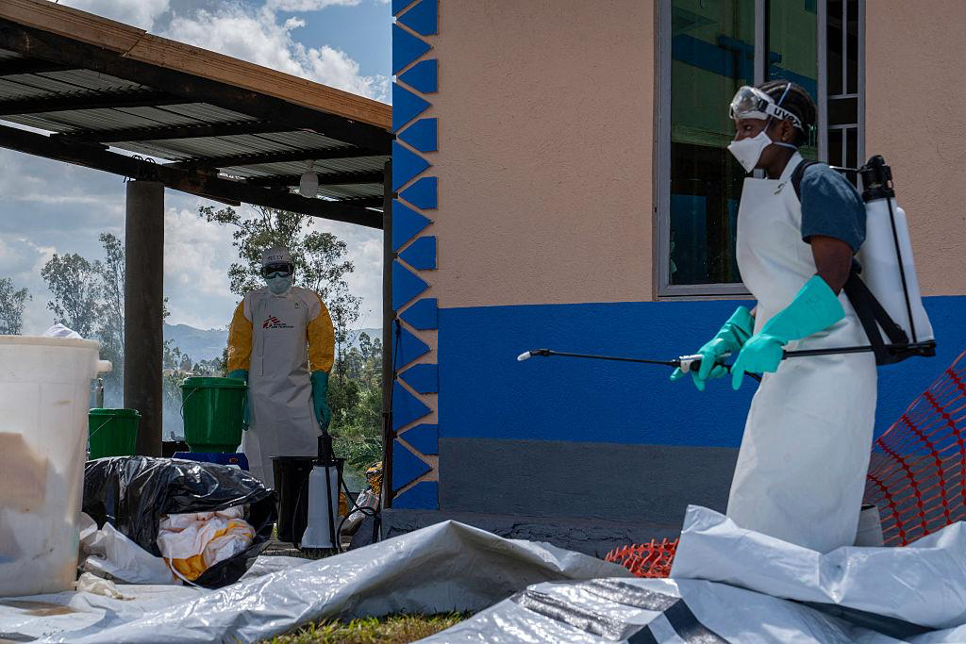
A nation counting its dead while the world counts its statistics.
KINSHASA, DEMOCRATIC REPUBLIC OF THE CONGO — There is something profoundly disturbing about a country becoming internationally famous for its mineral wealth while simultaneously struggling to protect its citizens from a disease it has confronted for half a century. Welcome to the Democratic Republic of Congo, a nation blessed with extraordinary natural resources and burdened by an extraordinary accumulation of preventable suffering.
The latest figures are devastating.
According to Congolese government data reported by Reuters on November 10, the country has recorded 11,042 confirmed Ebola cases and 5,387 deaths since the outbreak was declared in May 2026. The epidemic, caused by the Bundibugyo species of the Ebola virus, is now the largest and deadliest in the DRC’s history and the second-largest recorded Ebola outbreak worldwide. These are not numbers to be casually recited at an international conference. They represent mothers, fathers, children, healthcare workers, and entire families whose lives have been shattered. And yet, one can almost predict the familiar international choreography.
A new emergency is declared. Officials express profound concern. Experts convene meetings. Donors announce assistance. International agencies publish situation reports.
Meanwhile, in the villages and overcrowded health facilities of eastern Congo, families confront the terrifying reality of an infection that can kill before adequate medical assistance arrives. The virus does not wait for diplomatic consultations. It does not negotiate with armed militias. And it certainly does not respect the administrative delays of ministries, donors, or international institutions. The question is no longer simply how many people Ebola has killed. The question is why, after decades of experience, the world still struggles to prevent this level of devastation.
Fifty years of experience — and still fighting yesterday’s battles
The Ebola virus was first identified in 1976 during outbreaks in what is now the Democratic Republic of the Congo and in Sudan. Since then, scientists, epidemiologists and healthcare professionals have accumulated enormous knowledge about transmission, diagnosis, infection prevention, contact tracing and clinical management. The DRC itself has experienced numerous Ebola outbreaks.
Its healthcare workers have repeatedly demonstrated remarkable courage and technical expertise, often operating under conditions that would overwhelm far better-funded health systems. The country is not lacking experience. What it lacks is the consistent institutional capacity to transform that experience into lasting preparedness across its vast territory.
That distinction is fundamental.
A country can possess highly skilled epidemiologists while its rural clinics lack reliable electricity. It can have excellent laboratory scientists while patients must travel enormous distances for diagnostic testing. It can train emergency response teams while armed conflict prevents them from entering affected communities. And it can possess decades of outbreak-management experience while failing to finance the everyday health services upon which effective emergency responses depend. The result is a bitter paradox: extraordinary expertise operating within an extraordinarily fragile system. 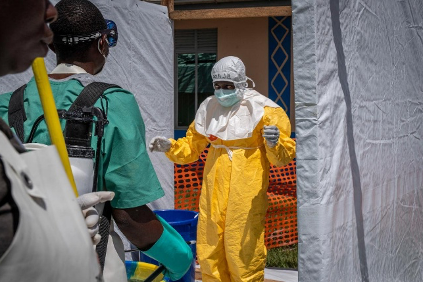 The 2018–2020 Ebola outbreak in eastern Congo demonstrated both the capacity of Congolese health professionals and the formidable obstacles created by insecurity, community mistrust and attacks on medical services. Those lessons should have informed durable investment in surveillance, emergency transport, laboratories and community health networks. Instead, the 2026 crisis has exposed how much remains unfinished. Experience, it turns out, is not the same as preparedness. And institutional memory cannot replace functioning institutions.
The deadliest enemy may be the diagnosis that comes too late
One of the most alarming features of the current epidemic is the number of people dying outside designated treatment facilities. In its November 6 situation report, the World Health Organization stated that, among 512 deaths reported since October 21, 335 occurred in communities, compared with 177 in treatment centers.
World Health Organization
That means roughly two-thirds of those recently reported deaths occurred outside treatment centers. The significance is enormous. An Ebola patient who dies without receiving appropriate clinical care represents not only an individual tragedy but potentially an additional challenge for outbreak containment. When infections are identified late, health teams have less time to isolate cases, identify contacts, initiate supportive care, and implement safe burial procedures.
But why are diagnoses delayed?
Possible reasons include limited access to testing, transportation difficulties, insecurity, shortages of trained personnel, fear of treatment centers, and delayed recognition of symptoms. These factors vary by community and require detailed investigation. Ebola’s early symptoms can resemble those of other illnesses, including malaria and other febrile infections. Without timely testing, distinguishing the disease can be difficult. A patient who first develops fever, weakness, or vomiting may seek care at a local clinic unequipped to diagnose Ebola. By the time the disease is recognized, opportunities for earlier treatment and contact tracing may already have been lost.
This is precisely why robust surveillance matters. The public health response cannot depend entirely on detecting an emergency after it has become impossible to ignore. A health system that consistently discovers danger too late is not merely responding to an epidemic. It is struggling against the consequences of its own limited preparedness.
When war becomes an accomplice to disease
Ebola is a biological threat. Armed conflict is a human-made catastrophe. When the two collide, the consequences can be devastating. Eastern Congo has endured prolonged insecurity involving armed groups, displacement, disrupted trade,e and repeated humanitarian emergencies. For public health workers, insecurity creates obstacles at nearly every stage of outbreak control. How does an ambulance reach a patient when roads are unsafe? How does a contact-tracing team visit households when communities are displaced, or access is restricted? How does a nurse maintain infection-prevention procedures when a facility lacks essential supplies? How does a family seek treatment when reaching a hospital may expose them to violence?
These are not theoretical questions.
They describe the operational realities that can transform a controllable chain of transmission into a regional emergency. The European Center for Disease Prevention and Control reported on November 10 that the epidemic had affected eight Congolese provinces, with Ituri and North Kivu accounting for the overwhelming majority of reported cases. Those areas also face significant security and humanitarian challenges. Yet it would be misleading to blame the entire epidemic on armed conflict.
Insecurity compounds weaknesses in infrastructure, public administration and health financing. It does not eliminate the responsibility to strengthen those systems wherever possible. A serious investigation must examine which areas were inaccessible, which services were interrupted, and what protective measures authorities and humanitarian partners attempted to implement. The virus may be invisible. The consequences of prolonged instability are not.
The cruel arithmetic of a collapsing health response
DR CONGO EBOLA OUTBREAK — NOVEMBER 10, 2026
Confirmed cases
11,042
Reported deaths
5,387
Provinces affected
8 of 26
Reported fatality ratio
48.8%
Government figures reported by Reuters. The crude case fatality ratio is deaths divided by reported confirmed cases; it does not measure an individual patient’s prognosis. Surveillance totals remain subject to revision.
These numbers reveal an emergency of exceptional severity. But one statistic deserves particular attention: the effectiveness of contact monitoring. The WHO reported that the average proportion of identified contacts seen daily was 86% over the preceding 14 days, below its operational target of 95%. In an Ebola outbreak, those missing follow-up visits matter. Every contact we cannot locate or assess represents a potential blind spot. Some may remain healthy. Others may develop symptoms. Without effective monitoring, the response can lose precious time. The appropriate question is not whether health workers are trying hard enough.
Many are risking their lives. The question is whether they have the personnel, security, transportation, communications equipment, and institutional support necessary to perform their work. A country cannot demand world-class epidemic surveillance from a health system operating without the basic conditions required to deliver it.
The vaccine problem: Scientific progress has not reached every Ebola virus
One of the most consequential challenges in this outbreak concerns the virus itself. The current epidemic is caused by Bundibugyo virus, a different Ebola virus species from the Zaire ebolavirus responsible for several previous major outbreaks. Vaccines and targeted therapeutics developed for Zaire ebolavirus cannot simply be assumed to provide equivalent protection against Bundibugyo virus. As of November 2026, no vaccine or specific therapeutic has been approved for this species. Researchers are pursuing clinical trials of candidate vaccines, with results expected in 2027. This scientific gap deserves international attention. But it also requires precision. The absence of an approved Bundibugyo-specific treatment does not mean that medical care is useless. Early diagnosis, fluid and electrolyte management, treatment of complications, and high-quality supportive care remain essential. Indeed, timely clinical care can make an important difference in patient outcomes. The wider issue is whether the international research and development system has invested adequately in preparing for less common but highly dangerous pathogens. Why must the world repeatedly confront deadly outbreaks before accelerating the development and testing of appropriate countermeasures? Why do promising research programs not always have sustainable clinical and manufacturing capacity in the regions most exposed to these diseases? And why does equitable access so often become an urgent international discussion only after an epidemic has already claimed thousands of lives? These questions deserve answers from governments, research institutions, manufacturers, and global health financing organizations.
Africa’s resources are valuable. Are African lives receiving the same attention?
The Democratic Republic of the Congo occupies a central position in global supply chains for minerals used in modern technology and industrial production.
Its cobalt, copper, and other resources attract international commercial interest.
But the contrast between the country’s resource wealth and the vulnerability of many of its communities is impossible to ignore.
Extractive wealth does not automatically translate into functioning hospitals.
International investment does not necessarily guarantee rural health infrastructure.
And a government’s mineral revenues do not automatically reach the communities where disease outbreaks begin.
The uncomfortable question is whether economic priorities align with the population’s basic needs.
This is not an argument that mineral companies are responsible for the Ebola outbreak.
Nor is it evidence that all international actors have ignored the crisis.
It is a demand for a serious discussion about public revenue, governance, development priorities and the financing of essential services.
The international community should not measure its relationship with Congo solely through trade, security and resource access.
Public health must be part of the same conversation.
A country cannot build lasting prosperity while entire communities remain vulnerable to emergencies that destroy families, disrupt economic activity and undermine public confidence.
The Congolese government must also demonstrate that it manages public resources transparently and directs them toward the services its citizens need.
Where is the accountability?
In international emergencies, there is an unfortunate tendency to treat every failure as an unavoidable consequence of difficult circumstances. A laboratory lacked supplies? Difficult circumstances. Could a community not access treatment? Difficult circumstances. Contact tracing fell below target? Difficult circumstances. A rural health center was overwhelmed? Once again, difficult circumstances. At some point, the phrase begins to sound less like an explanation and more like an administrative escape route. But accountability requires evidence, not slogans. The current outbreak warrants an independent examination of the timeline from initial infections to outbreak recognition, laboratory confirmation, and the deployment of emergency resources. Such a review should establish whether authorities had sufficient warning, released funds promptly, avoided logistical bottlenecks, and provided communities with timely information. It should also assess international partners’ performance. Were assistance requests answered quickly? Were frontline health workers adequately supported? Were laboratory and treatment capacities expanded according to need?
Did security arrangements protect patients and responders? Did local organizations play a meaningful role in designing and implementing the response? These are legitimate questions, not predetermined accusations. Accountability is not meant to manufacture villains. It is to identify preventable failures and ensure they are not repeated.
The forgotten heroes: Healthcare workers fighting an invisible enemy
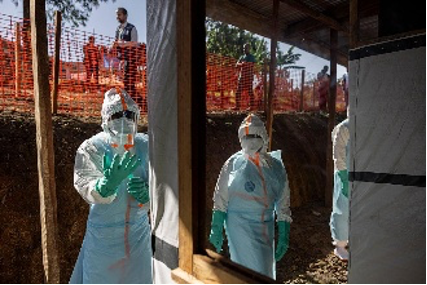 While politicians debate budgets and international organizations coordinate emergency meetings, Congolese healthcare workers face the epidemic’s consequences directly. Doctors, nurses, laboratory technicians, epidemiologists, community health workers, and burial teams are essential to containing Ebola. Their work demands specialized training, reliable protective equipment, psychological support, and adequate compensation. In conflict-affected communities, they may also face threats to their physical safety. Yet the success of an epidemic response often depends on precisely these professionals. A functioning surveillance system requires people who can identify unusual illnesses. Effective contact tracing requires trusted workers who understand local communities. Safe treatment requires trained personnel, functioning facilities, and a steady supply of supplies. And effective communication requires more than issuing statements from a distant capital. It requires listening. Public trust cannot be manufactured through press conferences. It must be earned through respectful treatment, transparent information, and consistent engagement.
Communities must understand how Ebola spreads, how to report symptoms, and why prompt medical attention matters. They must also be confident that seeking care will not result in abandonment, mistreatment, or unnecessary separation from their families. Frontline health workers are not disposable instruments of emergency policy. Protecting those who protect the population must become a fundamental measure of national preparedness.
When an African epidemic becomes an international emergency
The 2026 outbreak has also demonstrated that infectious diseases do not respect national borders. According to WHO’s November 6 report, cases linked to the outbreak had been recorded in the DRC, France, Kenya, Nigeria and Uganda. France and Uganda controlled transmission, while Kenya and Nigeria continued response activities.
The international dimension reinforces the need for coordinated surveillance, laboratory cooperation and rapid information sharing. It also exposes a persistent global health challenge: countries most exposed to epidemic threats are not always those with the strongest healthcare infrastructure. The solution cannot simply be to strengthen border controls in wealthier countries while leaving vulnerable populations without sufficient medical services. Protecting global health requires containing outbreaks where they occur, supporting local institutions and ensuring that affected communities receive timely assistance. The WHO has advised against general travel or trade restrictions targeting countries responding to this outbreak.
That recommendation reflects an important principle: epidemic control must be guided by scientific evidence, not panic or discrimination. African countries should not have to choose between controlling a dangerous disease and defending themselves against unnecessary economic isolation. Nor should they be expected to carry the financial burden of international health security alone. But international solidarity must be accompanied by domestic accountability. Neither foreign assistance nor national sovereignty should excuse failing to protect citizens.
What must change before the next outbreak?
The Congolese Ebola emergency demands more than expressions of sympathy. It requires measurable reforms.
First, disease surveillance must become a permanent national priority. Laboratory networks, community reporting systems, and rapid-response teams must function before outbreaks become national emergencies.
Second, primary healthcare infrastructure must be strengthened. Rural clinics need reliable supplies, trained personnel, transportation, and referral systems that can respond to suspected infections.
Third, healthcare workers must receive adequate protection. Personal protective equipment, infection-prevention training, appropriate compensation, and security measures are essential.
Fourth, emergency financing must be transparent and accessible. Governments and international partners should publish clear information about funding commitments, expenditures, and results.
Fifth, governments and international partners must develop conflict-sensitive public health strategies. Humanitarian access, community engagement and the protection of medical personnel should remain central to emergency planning.
Sixth, investment in vaccines, diagnostics and treatments must continue. Research into Bundibugyo virus should receive sustained attention rather than disappearing from international priorities when the outbreak eventually subsides.
Finally, affected communities must become partners in public health decision-making. Sustainable epidemic control depends on trust, local knowledge and meaningful participation. None of these reforms is glamorous. They do not generate the excitement of an international summit or the publicity of a major diplomatic announcement. But they save lives. And that should be the standard by which we judge public health leadership.
The final indictment: A continent cannot build its future on emergency responses
The Democratic Republic of theCongo’ss Ebola catastrophe should disturb the conscience of every government, international institution and organization that claims to support global health security. Not because every death can automatically be attributed to negligence. Not because medical science possesses a simple solution to every Ebola outbreak. And certainly not because Congolese healthcare professionals have failed to demonstrate commitment. The tragedy is that known vulnerabilities continue to collide with new biological threats, creating emergencies whose consequences fall most heavily on communities already weakened by conflict, poverty and inadequate services.
A nation cannot build an effective public health system through temporary emergency missions alone. It cannot substitute donor announcements for sustainable financing. It cannot replace laboratories with political speeches. It cannot protect patients with statistics. And it cannot expect healthcare workers to overcome every institutional weakness through courage alone. The irony is cruel: we celebrate advances in global medicine while thousands of people still cannot access timely diagnosis and appropriate care. The world has developed remarkable scientific tools. It has trained generations of epidemiologists. It has established international surveillance systems and emergency response mechanisms. Yet the DRC is confronting an Ebola outbreak that has already killed more than 5,000 people.
The appropriate response is not despair.
It is an insistence on understanding what went wrong, protecting those currently at risk, and investing in the institutions needed to prevent the next catastrophe. The Congolese people deserve more than another cycle of international concern followed by gradual neglect. They deserve a healthcare system that functions when the cameras disappear. They deserve a government capable of providing essential services. They deserve international partnerships built around long-term resilience rather than recurring emergencies.
Above all, they deserve to be treated as human beings whose lives matter before their deaths become international headlines. Because the ultimate scandal is not simply that Ebola has killed 5,387 people in the Democratic Republic of Congo. It is that, after fifty years of scientific experience with this disease, so many families are still confronting it without the protection that a resilient healthcare system should provide. And when the next epidemic arrives, history will ask the question that no government, donor, or international organization should be comfortable answering:
Did we learn from Congo’s suffering, or did we merely count its dead?


