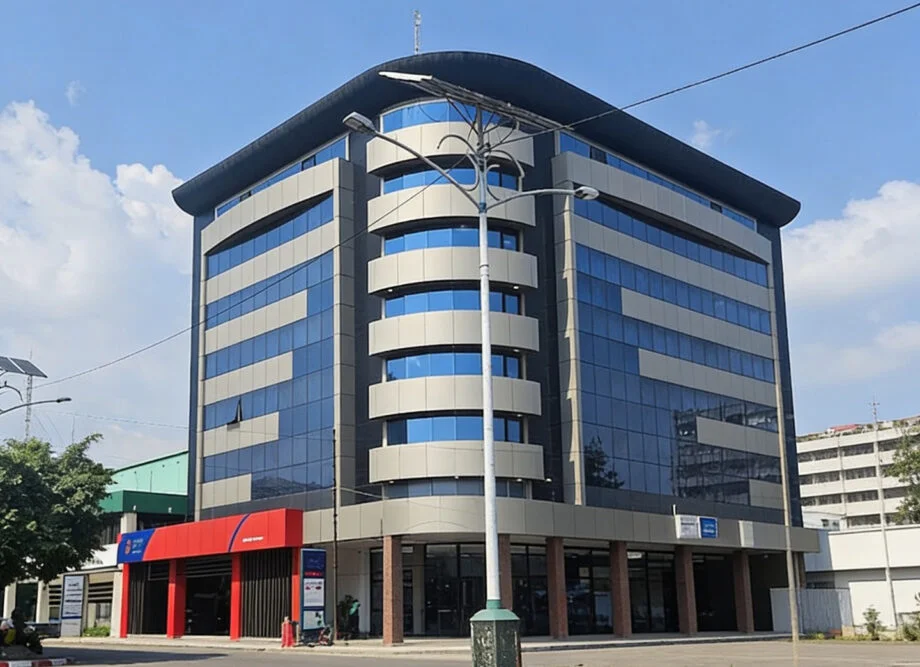
DOUALA, CAMEROON — Twenty-six billion two hundred million CFA francs! Surely a sum worthy of applause in the plush boardrooms of African finance. Bankers can proclaim their ambitions, financial institutions celebrate their partnerships, and official statements herald fresh prospects for growth. But in Douala’s markets, Bafoussam’s workshops, Yaoundé’s small businesses, and farming communities across Cameroon, a far more down-to-earth question persists: when will the billions announced at financial conferences finally reach the people who actually create wealth?
On October 21, 2026, the Board of Directors of the African Development Bank (AfDB) approved a €40 million facility, approximately CFA 26.2 billion for AFG Bank Cameroon. Its stated objectives are to strengthen trade finance, support small and medium-sized enterprises (SMEs), bolster local production, and promote job creation.
An admirable ambition, without question.
But at USAFRICA NEWS, we refuse to confuse billions announced with results delivered. Between funds made available to a bank and money that enables an entrepreneur to expand a business, the journey can be considerably more complicated than institutional press releases suggest.
Contrary to what a quick reading of the announcement might suggest, CFA 26.2 billion is not a check being handed out free of charge to Cameroonian entrepreneurs. The AfDB-approved facility consists of two distinct instruments. The first is a trade-finance line of credit of up to €30 million, approximately CFA 19.7 billion, with a three-and-a-half-year tenor and a three-year grace period. The second is a €10 million transaction guarantee, approximately CFA 6.6 billion, valid for five years.
That guarantee is intended, in particular, to facilitate confirmation of letters of credit used in international trade. In other words, one part of the package provides financing resources, while the other helps secure certain transactions. This is not CFA 26.2 billion being transferred directly to SMEs.
That distinction matters. In the language of finance, billions sometimes travel more easily through announcements than into small-business owners’ accounts. And when discussing economic development, words matter.
AFG Bank Cameroon has shown notable growth. According to reported figures for 2025, the institution held approximately CFA 1,196.4 billion in deposits and CFA 812 billion in customer loans. These indicators reportedly increased by 28.6% and 32.1%, respectively, year over year. Impressive material for institutional presentations, and a sign of the bank’s expansion. But a bank increasing its lending by more than 30% does not, by that figure alone, demonstrate that small businesses are sharing fairly in the growth.
How much of that lending went to SMEs? What shares actually financed agriculture, processing industries, or young entrepreneurs? How many loan applications were rejected? And, above all, on what terms were the loans granted? Such information would allow a more precise assessment of the economic benefits of this banking expansion. A bank can report billions in additional loans without improving the neighborhood entrepreneur’s chances of obtaining one.
The challenge of financing small businesses in Cameroon is neither imaginary nor new. In an analysis published in March 2026, the International Monetary Fund (IMF) highlighted the heavy concentration of bank credit among large companies. According to the data it examined, large enterprises received roughly 70% of business bank loans between the third quarter of 2021 and the second quarter of 2025, compared with 18% for SMEs.
The IMF also pointed to the predominance of short-term financing and the relatively high cost of credit. These figures reveal a structural imbalance. On one side are banks with substantial financial resources. On the other are small businesses confronting collateral requirements, borrowing costs, and difficulties financing investment. The result?
Entrepreneurs have projects, sometimes even confirmed orders and potential markets, but not always the resources needed to grow. And while institutions discuss economic transformation, some business founders keep discovering that a good idea alone is not enough to persuade a bank. Lending naturally requires careful risk management. But when banking mechanisms systematically exclude part of the productive economy, the entire country may pay the price.
One important aspect of the operation is its stated commitments to SMEs, women, and young people. According to the AfDB, half of the €30 million credit line is earmarked for SMEs—up to €15 million, or approximately CFA 9.8 billion. Of that SME allocation, 30% is intended to support businesses led by women and/or young people. That commitment deserves recognition, but above all, scrutiny. Announcing inclusive-finance targets is one thing. Demonstrating that the resources actually reached their intended beneficiaries is another.
Several questions will therefore need answers. How many women entrepreneurs will secure financing? How many young business owners will be able to expand? Which sectors will receive priority? Will smaller firms have access to terms suited to their financial capacity? And how will outcomes be evaluated? Women’s and youth entrepreneurship must not become mere public-relations talking points. Women and young entrepreneurs need more than a mention in press releases: they need accessible financing, transparent terms, and genuine opportunities to grow.
The facility for AFG Bank Cameroon is intended to support businesses involved in agro-industry, manufacturing, agribusiness, and import-export operations. It may help finance machinery, equipment, and production inputs. This approach has clear economic potential.
A Cameroonian company importing machinery to process cocoa, coffee, or other raw materials locally can help increase domestic value added. It can create jobs, build industrial expertise, and improve the country’s export capacity. Yet trade finance also raises a strategic question. Will these resources primarily fund productive equipment and strengthen Cameroonian exports, or will they benefit already-established trading activities?
Distinction is essential. Importing machinery to manufacture locally does not have the same economic effect as exclusively financing the distribution of imported finished goods. In a country seeking to expand its industrial base, the direction of financing deserves public debate. Cameroon cannot credibly claim to be building a productive economy while remaining merely a vast consumer market for goods made elsewhere. International trade is necessary, but it should also strengthen domestic productive capacity.
The African Development Bank exists precisely to advance the continent’s economic development. Its financing instruments are designed to support investment, businesses, and trade. In this operation, AFG Bank Cameroon serves as the financial intermediary responsible for implementing the mechanisms established under the partnership. It is therefore legitimate to ask how the announced commitments will be monitored. Which indicators will measure the financing actually deployed? How many companies will benefit from the facility?
What share of supported transactions will contribute to local production? How many jobs will be created or preserved? And to what extent will SMEs receive the resources intended for them? These questions do not challenge the legitimacy of the operation. They reflect a demand for transparency and evaluation. A development institution should not be judged solely by the amounts it approves. It should also be able to demonstrate the economic and social results of the initiatives it supports.
The issue extends far beyond Cameroon. In its 2025 report on trade finance in Africa, presented in May 2026, the AfDB estimated unmet demand for trade finance at between $74 billion and $92 billion in 2024. These figures illustrate the scale of the continent’s financing needs. They also show that difficulties accessing finance cannot be resolved through a handful of isolated initiatives, however substantial. What is needed are durable mechanisms, suitable guarantee instruments, better risk assessment, and financial products aligned with the realities of African businesses.
The continent’s development also requires an economic environment conducive to productive investment. After all, it would be paradoxical to multiply programs for SMEs without addressing the obstacles that make borrowing difficult. Africa needs strong, profitable banks. But it also needs banks that understand the realities facing its entrepreneurs. Above all, development finance must not become an exercise in which institutions celebrate the sums committed while prospective beneficiaries continue waiting for results.
The AfDB’s support for AFG Bank Cameroon offers a genuine opportunity to strengthen trade finance and assist Cameroonian businesses. Denying that potential would be unfair. But declaring the operation an economic success before its results can be measured would be equally premature. For USAFRICA NEWS, the real question is not whether AFG Bank Cameroon can mobilize additional financial resources. It is how those resources will help transform the country’s productive capacity.
Attention must be paid to financing terms, the diversity of beneficiary businesses, investments undertaken, and effects on employment. Commitments to SMEs, women, and young people deserve scrutiny. Economic development is not measured solely on bank balance sheets. It is also measured in new businesses, expanding operations, secure jobs, and increasingly competitive local production.
Twenty-six billion two hundred million CFA francs. The amount is substantial. The stated ambition is encouraging. And the partnership between the African Development Bank and AFG Bank Cameroon could help improve foreign-trade financing. But one truth must be emphasized: approving a financial facility is not yet proof of successful economic development. Cameroonian entrepreneurs need more than fresh financial announcements. They need suitable loans, accessible guarantees, transparent procedures, and an environment in which their businesses can thrive. Financial institutions, for their part, must reconcile those needs with the prudent banking practices essential to their stability. That balance will determine the operation’s real significance. While major institutions announce their billions, small entrepreneurs keep counting expenses, seeking financing, and struggling to keep their businesses afloat.
Real success will not lie in announcing CFA 26.2 billion. It will lie in showing, in the years ahead, how many Cameroonian businesses actually grew because of these resources.
If these billions enable SMEs to process more raw materials, enter new markets, and create jobs, the operation will fully deserve praise. Otherwise, it will remain yet another financial announcement. And Africa has heard plenty of those already. USAFRICA NEWS will therefore continue asking the question that figures alone cannot answer: who really benefits from the money intended for Africa’s development?


